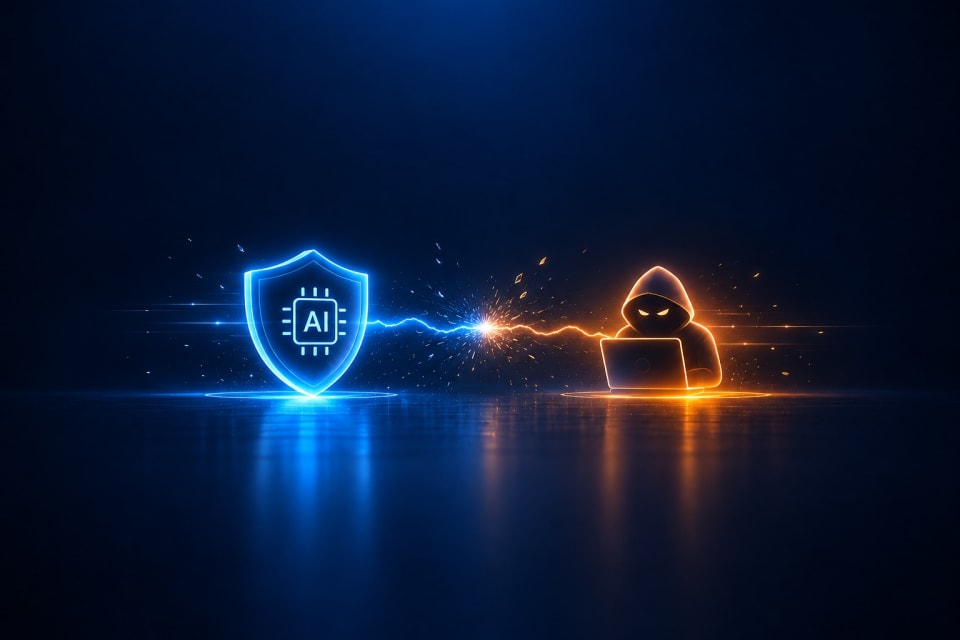
What Happens When Hackers Target the AI Protecting Your Business?
Businesses are increasingly using AI to analyze alerts, investigate suspicious activity, and help security teams respond faster. But that creates a strange new problem: what happens when attackers stop targeting the network and start targeting the AI watching it?
Hackers Can Try to Trick the AI
One growing threat is prompt injection, where malicious instructions are hidden inside websites, documents, emails, or other data an AI agent reads. OpenAI describes these attacks as a form of social engineering for AI, where outside content tries to convince an agent to perform actions the user never requested. See OpenAI’s explanation of prompt injection
Security AI Can Become Part of the Attack
Microsoft warns that if an attacker can influence an AI agent’s plan, the agent could misuse its own tools, access sensitive information, or perform unauthorized actions. Google has also warned that poisoned data sources, compromised AI extensions, and manipulated models can turn trusted agents into paths for reconnaissance or lateral movement inside a company. Read Microsoft’s guidance on securing AI agents See Google Cloud’s 2026 AI security report
AI Security Needs Security Too
The answer is not to stop using AI. It is to treat AI agents like powerful users. They need limited permissions, trusted data sources, activity monitoring, strong identity controls, and human approval before sensitive actions. At Sparkfire Solutions, we build Sparkfire AI, Sparkfire automation, and Sparkfire software around controlled access and real business workflows. Explore more Sparkfire solutions at sparkfire.us.
FAQs
Can hackers attack AI systems?
Yes, attackers can target models, agents, data sources, and integrations.
What is prompt injection?
It is an attack that hides malicious instructions inside content an AI reads.
Can security AI be manipulated?
Yes, poorly protected agents can be influenced into taking unintended actions.
How can businesses secure AI agents?
Limit permissions, monitor activity, and require approval for sensitive actions.
Is AI still useful for cybersecurity?
Yes, but the AI itself must be treated as part of the security environment.